


It is beyond repair
It is not the first time I am ranting about living in Germany. I have been writing about the broken rail system. And when I called Germany an underdeveloped country, many people seemed to agree with me.
Now that I have lived in Berlin for one and a half years or so, I have come to a realisation. This is partly because I have built up my social networks again. In other words, I have met many new people from different areas of Germany and even befriended a few of them.
My perspective has shifted a bit. I am still as annoyed as ever about the state of affairs here. And daily, I discover new things that just don’t seem to work. But I realised that some of the issues seem to be unique to Berlin. Unfortunately, I also believe they are somewhat unfixable. Let me dive into some more examples.
Road construction projects never finish
When we think of dismal and poorly managed construction projects in Berlin, most people think of the airport. But that one was no coincidence. Even small road construction projects take a ridiculously long time and go way over budget.
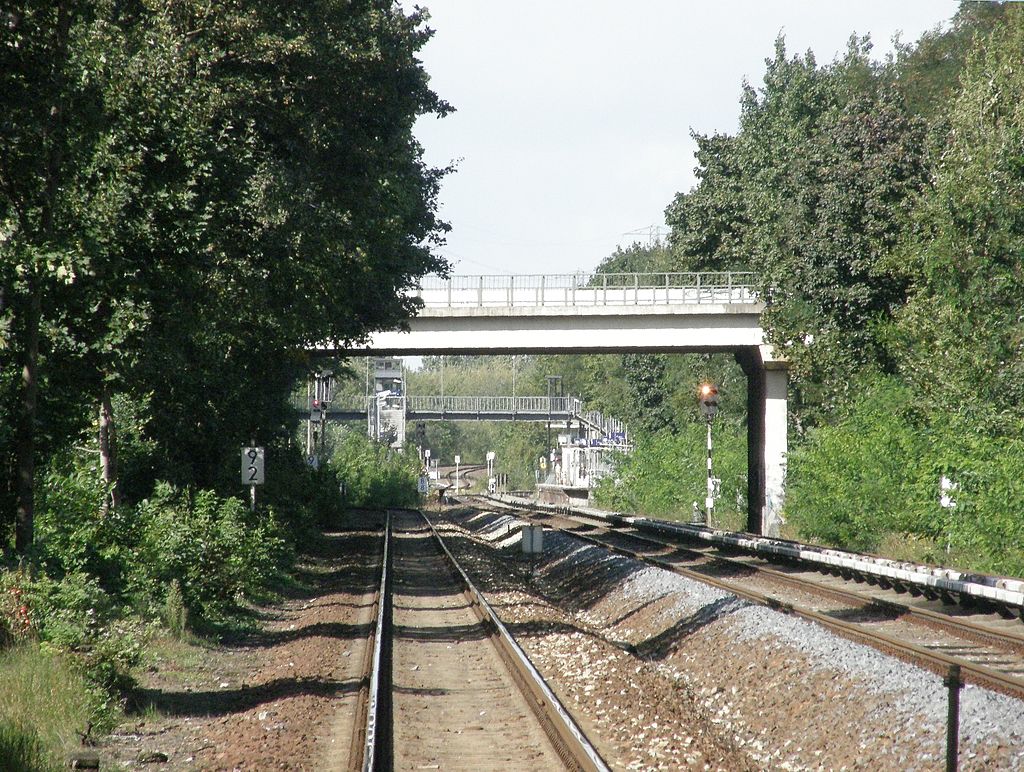
The image above is a road bridge, which spans the local S-Bahn line. The road is, in fact, a major artery in the district, where I live. It needs to be replaced. Construction started in December 2019. The expected finish time is sometime in 2025. In other words, a tiny viaduct, spanning less than 200 meters will take 5 years to finish. Meanwhile, the artery is blocked and both motorists and cyclists have to arm themselves with patience (Or take huge detours).
It is beyond my capacity to understand, why such a feat, which surely is not a huge engineering challenge takes 5 years. Perhaps the Chinese can teach us a trick, or two?
The mobility revolution will not happen in Berlin
Anybody who believes that the car-centric design of urban areas is future-proof is a fool. And most cities have realised this. They are making big strides to promote cycling and walkability. Like Paris, for instance. Now I know that cities like Amsterdam or Copenhagen represent the holy grail. But even in those places, there is plenty of room to improve. But Berlin is playing in a totally different league. Like the 3rd division.
They made an honest attempt by passing a mobility law in 2018. The law included a proposal to build 2.698 km of new cycling roads. So far, 113 km have been built. That’s less than 5 per cent of the goal. In 5 years. At that speed, the city will reach its goal in about 109 years. That’s the year 2132. And let us be honest. That plan wasn’t even that ambitious, to begin with.
What’s worse, however, is that the current government just announced that all bike lane construction will be put on hold to favour cars. The project is dead in the water. And it doesn’t even come as a surprise.
Do you enjoy this piece?
If you find value in independent writing, consider supporting this site with a small contribution, or read the mirrored version for free on Medium.
Support Alexander Benesch - Embracing the Open Future
The dysfunctionality of Berlin is historic and self-made
These are just a few examples of Berlin’s dysfunctionality. There are many others. For instance, the sluggish public service system. Anybody who tried getting an appointment to renew their passport knows what I am talking about. Sure, every place has its issues, right? Well, there are actually some of the issues that are very unique to Berlin. And it is worth exploring them. To do that, we need to take a short excursion into how Berlin functions politically, and what history has to do with it. As it turns out, quite a lot. Here we go!
The struggle for autonomy and executive power
Back in 1920, the city was bursting at the seams. The city roughly corresponded to the modern districts of Mitte, Tiergarten, Wedding, Friedrichshain, and Kreuzberg. The latter was then known as Hallesches Tor. In fact, many places still serve as a reminder of those city boundaries, because they carry the name ‘Tor’, which means gate in German. So if you go to places like Hallesches Tor, Frankfurter Tor, etc. Those places served as toll gates into the city long ago. And if you followed the road, you would eventually end up in the places that the names designated. So, following the road from Frankfurter Tor would eventually take you to the city of Frankfurt.
The problem was that the city desperately needed to expand because there was a great influx of industries and residents. Outside the city were numerous small autonomous villages. But they formally belonged to the state of Brandenburg. The government passed a law that would integrate many of those towns and villages into Berlin. The new city boundaries more or less still correspond to the boundaries today.
This was a great solution. But this deal required some compromise. Essentially, the city was divided into new boroughs, which incorporated those new areas. These boroughs were given a great deal of autonomy. However, the Senate in Berlin is meant to be the executive organ for all of Berlin. Back in 1920, nobody had the foresight to make a clear division of responsibilities. And that’s where we get a lot of our modern mess. Because in many cases, the districts can overrule the Senate, and vice versa. And it happens a lot.
Political polarization makes it worse
In recent years, we have also seen a trend of more political polarisation. This is not unique to Berlin; we see it all over the world. But political squabbles leave many well-intentioned projects dead. Especially if they involve multiple districts. Like new bike lanes, for example. City development has now reached a stalemate. This, by the way, often extends to funding for projects as well. Because the districts often want the Senate to pick up the bill, and vice versa. Until they reach a solution, the construction site will stay without workers.
That is one of the reasons why you can find construction sites in Berlin where nobody is working for months at a time.
A paradise for organised crime
Conditions like this generally also lead to ineffective administration. So, a lot of rules cannot be enforced. This is a perfect breeding ground for organised crime. And in Berlin, you’ll find plenty of it. The syndicates have more or less divided up the districts among themselves. In Lichtenberg, it is mostly the Vietnamese; in Neukölln, the Arabs; you get the drift. Their activities generate plenty of money. They need to launder it somehow. And therefore, it is not uncommon to see businesses that have no, or very few, customers. But they still thrive. Shisha bars, laundry services, massage parlours, restaurants, and so on. If you ever wondered why so many places do not accept cards, this is one of the reasons.
A significant portion of real estate is in the hands of these syndicates, but because many records are analog or incomplete, nobody really knows who the owners are. All of a sudden, a previously unknown person on social welfare puts down a few million euros to buy a villa. No questions asked. Now of course, the same policies also favor the super-rich, so it is no surprise that our political leaders treat the issue like a hot potato.
Can the situation in Berlin improve?
Honestly, I think it is very unlikely it will. The structural issues run very deep. Coupled with corruption from corporate tyrants and lack of political will, this place is probably FUBAR. It shows everywhere. The infrastructure is crumbling. There are more and more areas where even I, as a rather large male, feel uncomfortable going. It is dirty and gritty, nearly everywhere.
If you are considering moving to Berlin, you won’t get a recommendation from me. But you do you. If you like dysfunctional cities, Berlin is an excellent option.





.JPG)